
Joint Care & Arthritis
Managing Knee Osteoarthritis: Active Exercise for Joint Longevity and Walking Ease
Cartilage wear in the knee does not mean you must stop moving. Discover how targeted quadriceps strengthening reduces intra-articular pressure and keeps you walking comfortably.
Managing Knee Osteoarthritis: Active Exercise for Joint Longevity and Walking Ease
Cartilage wear in the knee does not mean you must stop moving. Discover how targeted quadriceps strengthening reduces intra-articular pressure and keeps you walking comfortably.
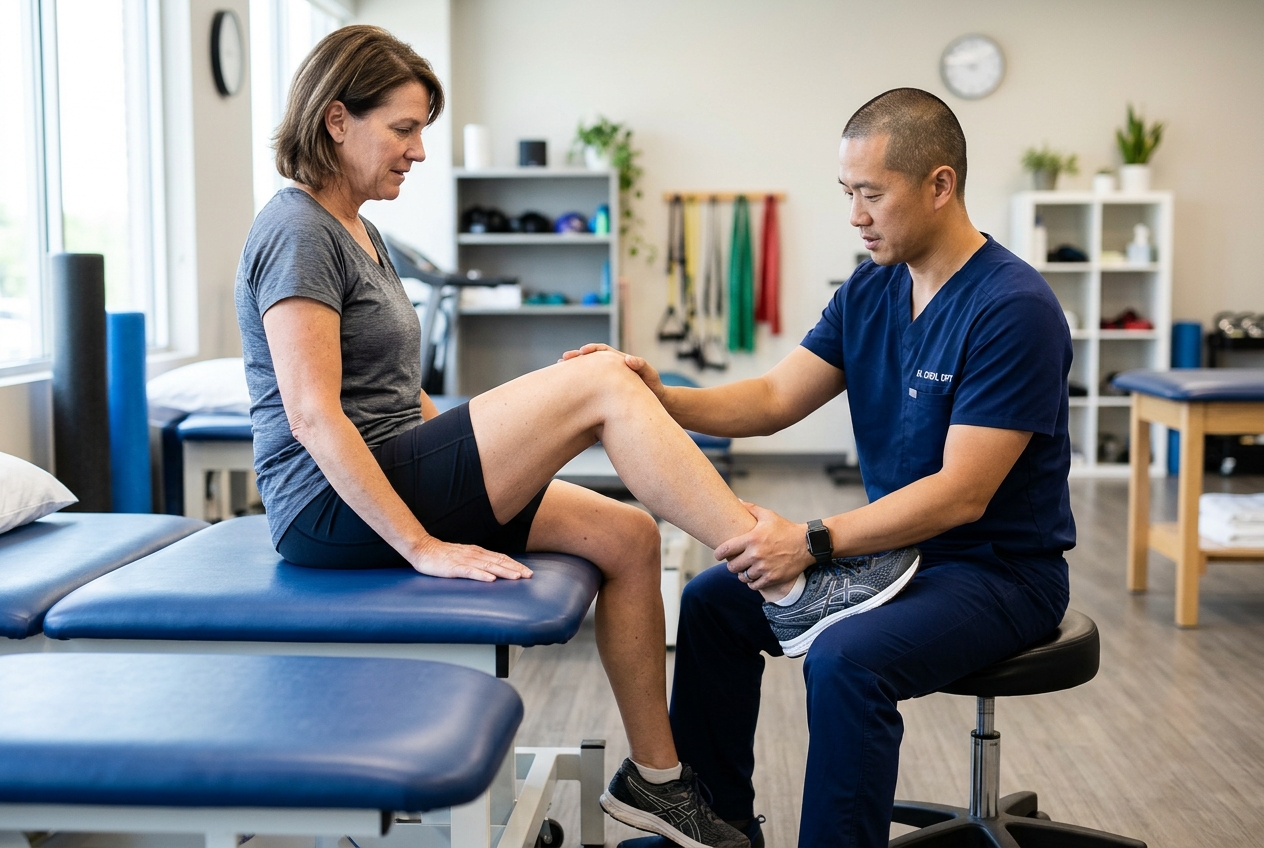
Knee osteoarthritis is frequently described as 'wear and tear', which often leads patients to believe that walking or moving will further destroy their joints. In truth, joint cartilage relies on movement for its nutritional fluid exchange.
### The True Shock Absorbers of the Knee
Your thigh muscles (quadriceps and hamstrings) are the primary shock absorbers of your legs. When they are deconditioned, every step sends direct impact into the joint space. Strengthening these muscles reduces the burden on your knee cartilage by up to 30%.
### Safe Joint-Friendly Habits:
1. **Low-Impact Movement**: Stationary cycling and flat walking encourage synovial fluid circulation without pounding the joints.
2. **Isometric Thigh Squeezes**: Tightening the front of the thigh while sitting or lying down builds strength without grinding the joint surfaces.
3. **Footwear Selection**: Cushioned, supportive footwear prevents ground-reaction force from traveling directly into the knee.
*Medical Disclaimer: Physical therapy exercises should be customized to your specific stage of osteoarthritis. Always consult a physiotherapist before initiating high-repetition routines.*
Important Medical Notice
Information on this website is for educational orientation and does not substitute for a licensed physical therapist evaluation. Outcomes depend on individual anatomy and clinical compliance.